Charting Capital Movement Through Layered Bonus Systems in Mobile Live Dealer Platforms and Shared Reward Reservoirs
Written by Leon Schröder · Oct 19, 2026

Charting Capital Movement Through Layered Bonus Systems in Mobile Live Dealer Platforms and Shared Reward Reservoirs
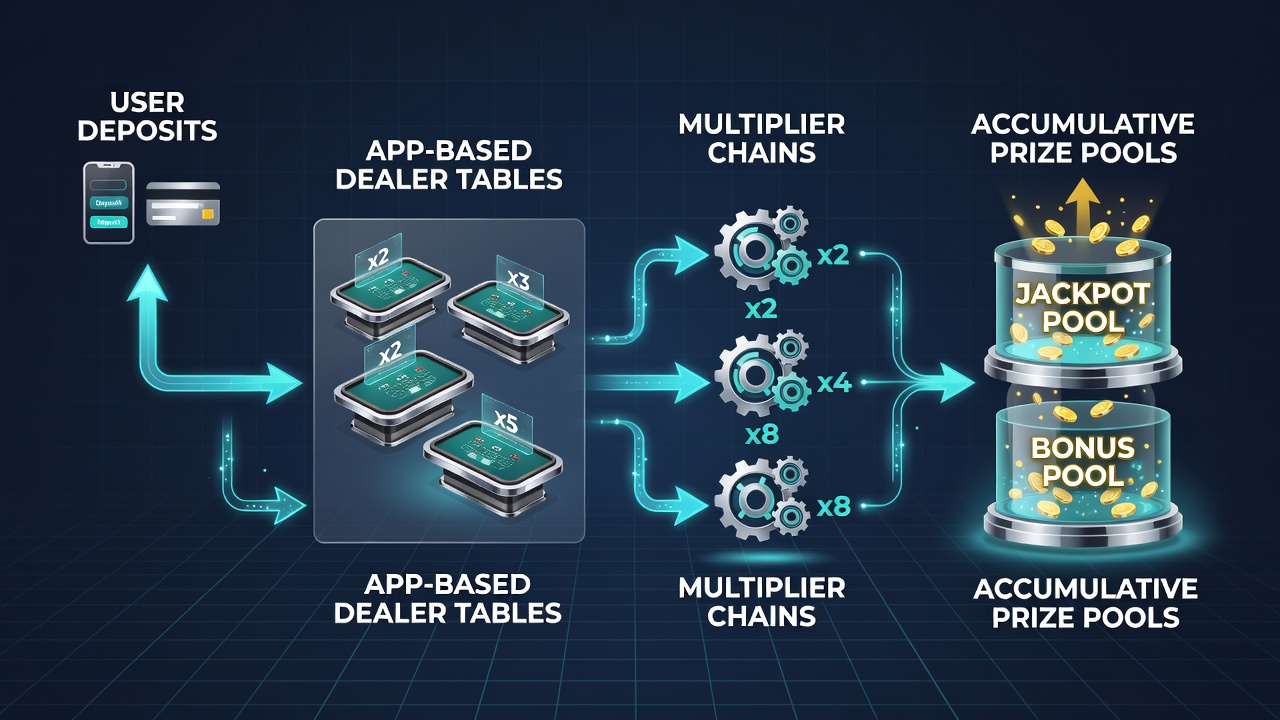
App-based dealer tables operate through structured deposit pathways that feed directly into multiplier sequences, where each contribution increments both individual session multipliers and collective prize pools. Data from October 2026 shows continued growth in these integrated systems as operators refine allocation algorithms to balance player engagement with pool sustainability. Observers note that deposits enter these environments through standardized wallet interfaces, after which backend protocols distribute portions across immediate game stakes, multiplier ladders, and accumulative reserves.
Initial Deposit Capture and Allocation Logic
Systems record incoming funds at the point of transaction, then apply predefined ratios that split amounts between active table play, staged multipliers, and reserve contributions. Researchers have documented how these ratios shift based on game type, with roulette variants often directing higher percentages toward accumulative pools compared to blackjack formats. The process relies on real-time ledgers that update across distributed servers, ensuring each deposit registers simultaneously in personal multiplier chains and global prize calculations.
Operators implement timestamped tracking that follows every unit from deposit confirmation through subsequent wagers, creating audit trails required by multiple regulatory frameworks. One study from the Alcohol and Gaming Commission of Ontario examined similar allocation models and found consistent patterns where early deposits influence multiplier growth rates more significantly than later contributions within the same session cycle.
Multiplier Chain Construction in Live Dealer Apps
Multiplier chains develop through sequential betting activity, where each wager applies incremental factors drawn from the initial deposit allocation. These chains function as layered sequences, with base multipliers expanding through repeated participation and additional deposits triggering acceleration phases. App interfaces display current chain status to players, though the underlying computation occurs server-side to maintain consistency across concurrent sessions.
Evidence indicates that chain progression ties directly to deposit timing, with clustered deposits creating steeper multiplier curves than evenly spaced ones. Technical documentation reveals that many platforms cap individual chain lengths while allowing parallel chains to form from separate deposit events, thereby sustaining engagement without unbounded growth in any single sequence.
Accumulative Prize Pool Integration
Portions of every deposit feed into shared prize reservoirs that support progressive and accumulative payouts across networked tables. These pools aggregate contributions from multiple jurisdictions, with algorithms adjusting distribution rates according to regional player density and historical payout frequencies. In October 2026, several major platforms reported pool balances reaching record levels due to increased mobile participation rates.
Pool mechanics incorporate safeguards that prevent over-allocation during high-volume periods, redirecting excess deposits into secondary reserve tiers. Analysts from the Australian Gambling Research Centre have tracked similar systems and noted that pool stability improves when multiplier chains incorporate explicit contribution caps rather than unlimited scaling.
Cross-Platform Tracking and Regulatory Compliance
Modern platforms maintain unified ledgers that reconcile deposit flows across mobile applications, desktop clients, and live dealer streams. These ledgers support compliance reporting by generating granular breakdowns of how individual deposits influence both personal multipliers and collective pools. Regulatory bodies in various regions require periodic audits of these records to verify that allocation rules remain consistent with licensed parameters.
Technical standards continue evolving to accommodate faster transaction speeds while preserving traceability. Developers integrate cryptographic markers at each allocation stage, allowing independent verification that funds reach intended multiplier and pool destinations without diversion.
Conclusion
The architecture connecting deposits to multiplier chains and accumulative pools relies on precise allocation protocols, timestamped tracking, and cross-platform reconciliation. As mobile dealer applications expand, these mechanisms determine both individual reward progression and the overall scale of shared prize systems. Continued refinement of these flows supports operational transparency while meeting requirements set by diverse regulatory authorities worldwide.